Wednesday, 9 September 2015

Gaining Muscle Mass #Diet MuscleMassBrothers

Importance of Gaining, Muscle Mass Diet


Eat quality food. Increase your protein. Train hard.


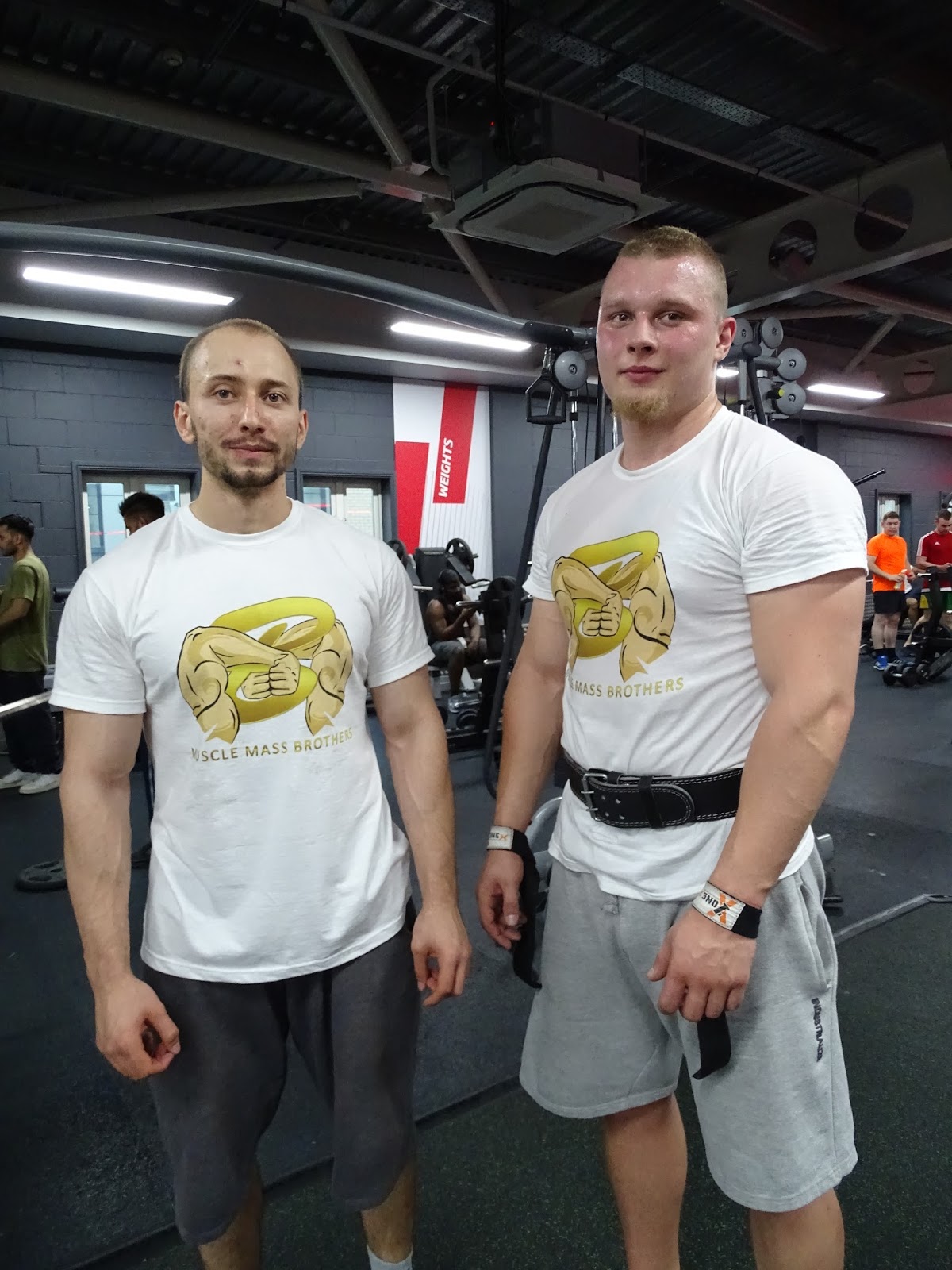
Those rules may seem obvious, but here's the catch: the order they're in matters. Two of Muscle Mass Brothers are on gaining diet. More muscle you have, the more you have to feed. The key is feeding your muscles consistently with high-quality fuel.

We could go down to numbers with macros but each person will have different intake of proteins, carbs and fats. We will tell you the priorities, because the way they break down for everyone is going to be different. Here are the three guiding principles that determine what goes on my plate:

Balance meals around lean protein
Include nutrient-rich, low-glycemic carbs
Enjoy generous portions of healthy fats

THE PROTEIN WAY OF LIFE


Our muscles are made out of a protein that is why we use them to build up our body. Well, not quite. The amino acids that make up protein are the building blocks of muscle, and your body needs these substances during and after training for repair and recovery. It breaks down the protein into the respective aminos, uses them for their various functions, and then you convert what doesn't get used. While training at gym we break our muscle tissues that is why we need to replenish them, so balancing it out with adequate amounts of protein throughout the day is important.

We take in 1.5 to 1.75 grams of protein per kg of bodyweight per day and divide that total number by the number of meals.  We need to calculate how much protein each day we need to consume. Spread this across 6 meals. The reason we eat protein frequently throughout the day is that muscles are built outside the gym. We may spend an hour or two training each day, but it's the other 22 hours or so when we earn our results.

The amount of protein we eat is a secondary concern. Quality comes first, so think "what" before "how much." For Muscle Mass Brothers, the "what" is lean and not fried. If you adhere to eating lean, non-fried sources of protein, you maximize your chances of gaining maximum amounts of muscle with minimal increases in body fat. My favorite sources of lean protein are standard: egg whites, chicken breast, 98 percent or leaner ground beef, turkey, fish, and quality protein supplements.

Another benefit of protein is that it doesn't raise insulin like carbs do. Insulin is a powerful hormone, and elevating levels at non-optimal times—basically any point in the day besides post-workout—can lead to increased fat storage. By eating lean protein often and carbs more strategically, we keep insulin levels in-check until the time comes when we want to raise them.

FIND THE SWEET SPOT


Protein is the cornerstone of bodybuilding nutrition plan in that it determines how many meals we eat each day. But carbs and healthy fats are equally important and so is their quality. One of the most common questions we get from people is if we eat a low-carb diet to stay sub 8-percent body fat.

On harder training days, we consume upward of 500 g of carbs. It all comes down to finding the amount of carbs your body can actually utilize and consuming them strategically, rather than letting cravings or social situations determine it for you. Out-of-control carb intake leads to unwanted spikes in insulin, which lead to fat gain. It's that simple.

Carbohydrates give our working muscles the energy to do their job. Without them, we would feel tired, and our gym sessions would definitely struggle as a result. Just like we approach our protein intake as a way to repair our muscles after training, we aim for the carb "sweet spot" where we can maximize energy and glycogen replenishment. And just like with protein, quality is crucial. Our carbs come from high-fiber, high-nutrient foods. We should include plenty of sweet potatoes, oatmeal, and brown rice, among others.

HEALTHY FATS TIME FOR AN OIL CHANGE


When trying to gain size, fat is a great source of calories, offering double that of both carbs and protein. Fat gives 9 calories per gram. Carbs and protein both give 4 calories per gram.

More calories? How could that be good when you're trying to avoid getting fat? Remember, the quality of the calories you pack in is the first priority when you're trying to pack on quality muscle. Enjoy—that's right, I said enjoy—the following four sources first and foremost, and you can't go wrong:

Avocado
Fish
Nuts and nut butters (high quality nu butter with high % of nuts)
Olives/olive oil

There are nutrients within these fat sources which decrease inflammation, improve mental function, improve eyesight, and give you healthier skin, hair, and nails. When we are crushing the iron in the gym each day, our goal is to be strong and big, but also healthy and mobile. To get that way, we need to eat all of these generously on a regular basis, and we also take omega-3 supplements daily, in the form of fish oil or krill oil.

There's some cool science showing how omega-3 fats might actually burn fat as well as provide other benefits. Cheap, processed fats from things like butter, chips, and ranch dip, on the other hand, are simply a "no."


QUALITY TRAINING DESERVES QUALITY FUEL


Bodybuilding is more than a culture it's a lifestyle. You can't do it sloppily and succeed, especially if you have high-level competitive ambitions like some of Muscle Mass Brothers members. Your results speak for themselves, and your hard work pays off in ways that you can see, feel, and measure. There's nothing like the feeling when it all comes together.

For more informations, Diet, Training or have any questions do not hesitate to contact Muscle Mass Brothers via website, Facebook or Forum.

Wednesday, 2 September 2015

#Full-Body Workout #MuscleMassBrothers


BENEFITS OF A FULL-BODY WORKOUT

"Einstein famously defined insanity as doing the same thing over and over again but expecting a different result."


What is  Full-body workout training? 


How do we build our muscles?  What is the true way of muscle perfection?  The true way to build a chiseled, muscular physique is day after day, year after year of hard 4-5 times a week of training. But is it the only way?

Hard work is still needed. You get as much as you give in to your training. However, you don't have to train on a split system four or more days each week to see gains. The full-body workout can help you progress and is easy to fit into your schedule.

Full-Body workout has become a stereotype but it can be used to lose weight and/or gain muscles. One of our Muscle Mass Brothers is on this regime and in few weeks will show his transformations.
Full-Body workout is not what some people think. It is not only lightweights and lots of rest. Real full-body workout uses relatively heavy weights but not too heavy so you can accomplish your reps. You can shape this kind of training depending on your goals.


Few points about Full-Body workout:


SAVES TIME


Probably the biggest positive about training your entire body at once is that your gym frequency decreases to around two to three times every seven days. However to complete all exercises takes around 1 hour and if you add to it Cardio for reduction like 45 minutes of running or cycling will add up to your training to around 2 hours. 3 days a week = 6h hours  

BOOSTS YOUR CARDIOVASCULAR SYSTEM


Squeezing solid 3-4 sets per body part into a 60-minute workout session gets your cardiovascular system up to speed in a hurry.

RULES FOR FULL-BODY WORKOUTS


Train every 2 days if you want to make it to insane intensity you can fit in 6 days of full body workout and rest on Sunday.
Training with weights every few days in between full-body workouts can be used to add a few cardio sessions.

LIFT HEAVY


Many athletes who try full-body workouts get trapped into training lighter than they usually would in order to conserve energy for body parts that come later in their routine. However it is all up to you to make most progress we need exercise in progressive and optimal level we can create a training journal where we can note down what weights per sets we use. We can add weights week to week slightly increasing to build up our strength. Keep your weights as heavy as you can.

PERFORM 1-2 EXERCISE PER MUSCLE GROUP


It is very important to limit our exercise per muscle group.  
The exercise allow you to move heavy weights and overload the muscles without performing endless exercises. Once you choose your exercises, plan your routines so you do 3-to-4 sets of each exercise for 10-to-15 repetitions.

KEEP YOUR WORKOUT TO AN HOUR OR LESS


When you are planning your workouts, remember that resistance training affects your natural muscle building hormones and adjust accordingly.
Lots of big compound exercises will help boost your natural testosterone levels; however, long workouts also boost levels of the catabolic hormone cortisol.
Keeping your workouts fairly brief but still intense is ideal for getting the best of both worlds. Sticking to 60 minutes or less is a good rule of thumb.

CONSUME A POST-WORKOUT SHAKE IMMEDIATELY AFTER TRAINING


During full-body workouts, large amounts of glycogen are used to fuel your exertions, so it's important that you replenish your glycogen stores as soon as possible after training.
Replenishing your glycogen right after training jump-starts the recovery process. Conversely, not taking advantage of this crucial time can slow your results significantly. Think of it as filling up the gas tank on your car after a long drive.

CHANGE THE ORDER OF YOUR WORKOUTS


Training chest first for every full-body workout is doing a disservice to the rest of your physique's symmetry.
What seems to work better for ensuring your three major body parts get equal attention is alternating between doing chest, back, and legs first in your three workouts a week. Don't always leave abs or calves for last, though!

EXAMPLE:


Based on our forum and one of the Muscle Mass Brothers we have set of exercises

Lets talk about Training A:

  1. Squat with the barbell (on the back)
  2. Leg Curl depending on the machine you have in the gym (sitting/laying down)
  3. Arm Bar Row above the grip
  4.  Deadlifts
  5.  Front Dumbbell Raise
  6.  Lateral Raise
  7. Dumbbell Chest Press (flat bench)
  8.  Incline flyes on bench
  9. Barbell Curl


Training B:

  1. Sit up with barbell in front
  2. Pull ups Wide grip
  3. Arm Bar Row under the grip
  4. Standing military Press
  5. Upright Barbell Row
  6. Incline Bench Press
  7. Dips
  8. Biceps with dumbbell


Week 1:                                                                                               Week 2:
Day 1: A15
Day 1: B15
Day 2: B10
Day 2: A10
Day 3:  A5
Day 3: B5

# Training with 15 reps have 3 sets
#Training with 10/5 reps have 4 sets


Eg.:        
            Day 1: A 15 = We use training A with 15 reps of 3 sets per exercise
Day 2: B10 = We use training B with 10 reps of 4 sets per exercise 

If we are on reduction we can add 30-45 minutes of cardio with heart rate of 135-145 BPM
and after each training add 20 minutes of ab work. 


We advise to change our exercise training every 8 weeks to keep our body adapting to different types of exercise for better progress.

Muscle Mass Brother welcome any questions and can help you in Full-Body workout and other trainings, If you want to find out more check our Facebook, Website and Forum

We can help in your training or even train with you just contact us for more info.


OTHER EXERCISES WE CAN USE AND SWAP


BACK

Bent-over barbell rows
Pull-ups
Seated cable rows

BICEPS

Standing barbell curls
Alternate dumbbell curls
Preacher curls

CHEST

Bench presses
Incline barbell presses
Dumbbell presses

TRICEPS

Parallel-bar dips
Lying dumbbell Extensions
Pushdowns

SHOUDLERS

Dumbbell presses
Behind Neck presses
Upright rows

CALVES

Standing calf raises
Seated calf raises
Donkey calf raises

LEGS

Squats
Leg presses
Hack squats

ABS

Hanging leg raises
Decline-bench crunches
Rope crunches

Check our website:

#MuscleMassBrothers #Full-body #Workout 


Tuesday, 25 August 2015

Project: GYM #MuscleMassBrothers #ProjectGYM

Intro to Project: Gym 


The Guardian report from 18th Tuesday, August 2015:


"UK gym membership has soared by 44% in the last year, figures reveal, driven by the growth in popularity"

#MMB Alex and Daniel

What is our project about


Project: Gym is MMB idea of promoting your local gyms, sport, weightlifting, bodybuilding, fitness and gym community which is growing from day to day. We know from recent and past reports about growing number of gym memberships in UK this year it was 44% growth. Muscle Mass Brothers from that figure can see interest in gym, fitness and lifestyle improvements. However apart from huge interest into gym, sport, weight and fitness training, another figure shows something very interesting.
Same report from 18th Tuesday, August 2015:
The Guardian "Nearly four-fifths of UK adults have set themselves at least one health or fitness goal, yet only 12% currently use a gym."

This is the point when Muscle Mass Brothers has begun project of promoting your local gym and motivating you and your friends to use your existing or get membership begining training to improve your lifestyle.

Muscle Mass Brothers will attend many gyms around London and UK to show the amazing atmospheres and health benefits that your local gym can offer to you!

The #ProjectGYM is pretty simple to increase the number of people who already know and are interested in attending gyms, so we can change 12% to 44% or even more. There are lots of people who are having memberships that are unused, MMB is here to motivate you in using what you already have and begin improving your lifestyle. Gym can be place where you gain muscles, lose weight, get fit, improve any sport aspects that you are interested in.

Here is another source:
"According to thinkmoney, a million people in the UK pay for gym memberships they don’t use, wasting around £480 a year each. That’s £480million we waste through our collective laziness."

Do not waste your money get going, at least 3 times a week can improve your health drastically!

Muscle Mass Brothers apart from motivating people to attend gyms will video many locals gyms. MMB will show the atmosphere in as many gyms as it is possible as long the gym accepts us. We will also show the exercises and different use for the equipment you might have in your local gyms. Each gym has a story to tell Muscle Mass Brothers and Creatos Media will show it you via Youtube and video production. We will interview staff of each gym we visit to show you the commitment and atmosphere of the gym.

We might be visiting your local gym check our social media, website and blog for an update!

Muscle Mass Brothers will announce visiting gyms, and post our videos on our Youtube channel:


If you want Muscle Mass Brothers to visit your local gym let us know. We will contact your gym and visit it. You can drop us a message on social media channels or write proposal on our Forum

#MMB Andrzej


#MuscleMassBrothers #ProjectGYM


Thursday, 20 August 2015

Firday's with #MuscleMassBrothers

Friday Workouts with Muscle Mass Brothers

We are: "Experienced sports men in gym, bodybuilding fitness and diets."


Muscle Mass Brothers has been filmed in Fitness First Gym at Leyton for 2 weeks now we are coming this Friday too if you would like to see our team and talk to us come by. We will in near future visit other gyms in London and UK.

Last Friday Muscle Mass Brothers had a chance to make our first interview which soon will be posted on our social media and Youtube channel.

Youtube Channel: 

Muscle Mass Brothers Youtube channel:

We have already introduced our first video showing our Friday Back day training. 


Muscle Mass Brothers, why we do it?

Recently we were asked four simple questions which we would like to share.

What Muscle Mass Brothers offer to community?

Muscle Mass Brothers is made out of 4 individuals with different and similar knowledge of sport aspects. We have trained different sport disciplines starting from: football, volleyball, roller blade skating, karate, kick boxing and other martial arts yet we all are linked to the gym workouts with different aims. Apart from wide sport knowledge we can help out with diets and supplements. Our Forum is open to anybody, we want to build community where everyone can share their sport experience and motivate each other to continue working on our. Your body is your temple. 

#MuscleMassBrothers also will offer community various videos showing local gyms, interviews, training and motivating audience to exercise with purpose such as lose weight, gain muscles or reach your own sport goals we are out there for you.  

Check our forum and join our community ask us any question related to sport, gym, diet and supplementation: http://musclemassbrothers.forumotion.co.uk

What makes Muscle Mass Brothers stand out in the crowd ?

Muscle Mass Brothers has specifically concentrated on gym workouts and all aspects of losing weight, gaining muscles and achieving our goals via working out in the gym. We have different knowledge and experience which allows us to work on any sport cases whether it is training program, diet or supplementation. We have introduced a forum where anybody can ask a question also we are producing post on our blog and social media to keep our community informed. Furthermore we produce videos of our workouts and in gym interviews with stuff, owners, managers and people who are working out and are willing to talk about gym, sport and lifestyle. We have few different points which in future will be our fundamental base for our work. 

Muscle Mass Brothers is also working with Creatos Media which is a company owned by one of our members. Creatos Media is a company which works on digital marketing and promotion of #musclemassbrothers.


What challenges can Muscle Mass Brothers solve ?

We take the stress out of creating a diet and training plan. Muscle Mass Brothers can help in any sport aspects. Sky is the limit ask us any questions and we will find the answer for you. We have tested diets, training and supplements on ourselves to get the best results. Do not hesitate to contact us via social media, website, blog or forum. 


Why do we care about sport and gym aware community?

Muscle Mass Brothers members think that sport is essential in our daily routine. Physical activity is a must in our world. There are numerous health problems arising form lack of exercise. Muscle Mass Brothers wants to motivate and spread the passion for exercises. Obesity, sugar drinks, artificial food products, chemicals used over our vegetables and fruits are just small part of world problem. We want to help YOU get healthier under your own terms we can help you in creating your own personal diet and training to make it as exciting as possible just to suit your needs. Contact us if you are interested in starting healthy diet and exercise program.  

Check our Facebook page for more information and do not hesitate to contact us, comment, like and share.


Thanks for reading our post. 
#MuscleMassBrothers


Wednesday, 12 August 2015

Keto Diet

Keto Diet

Based on our forum Muscle Mass Brothers will describe ‘Keto Diet’ or so called ‘fat diet’.


A keto diet is well known for being a low carb diet, where the body produces ketones in the liver to be used as energy. It’s referred to as many different names – ketogenic diet, low carb diet, low carb high fat (LCHF), etc. When you eat something high in carbs, your body will produce glucose and insulin.

Glucose is the easiest molecule for your body to convert and use as energy, so it will be chosen over any other energy source.

Insulin is produced to process the glucose in your bloodstream, by taking it around the body. Since the glucose is being used as a primary energy, your fats are not needed, and are therefore stored. Typically on a normal, higher carbohydrate diet, the body will use glucose as the main form of energy.

By lowering the intake of carbs, the body is induced into a state known as ketosis. Ketosis is a natural process the body initiates to help us survive when food intake is low. During this state, we produce ketones, which are produced from the breakdown of fats in the liver. The end goal of a properly maintained keto diet is to force your body into this metabolic state. We don’t do this through starvation of calories, but through starvation of carbohydrates. Our bodies are extremely adaptive to what you put into it – when you overload it with fats and take away carbohydrates, it will begin to burn ketones as the main energy source.

This is how the keto diet works now I will show how the macro nutrients are divided.

To start a keto diet, you will want to plan ahead. That definitely means having a viable diet plan ready and waiting. What you eat really depends how fast you want to get into a ketogenic state. The more restrictive you are on your carbohydrates (less than 15g per day), the faster you will enter ketosis. Normally, anywhere between 20-30g of net carbs is recommended for every day dieting – but the lower you keep your glucose levels, the better the overall results will be. If you need ideas for food, there are plenty of keto recipes for you to choose from.

- Your nutrient intake should be something around 70% fats, 25% protein, and 5% carbohydrate.
- You want to keep your carbohydrates limited, coming mostly from vegetables, nuts, and dairy. Don’t eat any refined carbohydrates such as wheat (breads, pastas, cereals), starch (potatoes, beans, legumes) or fruit.
- Dark green and leafy is always the best choice. Most of your meals should be a protein with vegetables, and an extra side of fat. Chicken breast basted in olive oil, with broccoli and cheese. Steak topped with a knob of butter, and a side of spinach sautéed in olive oil. If you’re finding yourself hungry throughout the day, you can snack on nuts, seeds, cheeses, or peanut butter to curb your appetite.

Example from our forum:

The ideal meal breakdown for a man who weighs 100 kg and has 173cm would be:

I
5 eggs + vegetables
II
Fatty meat 250g + vegetables
III
Fatty meat 250g + vegetables
IV
Chicken breast 200g + vegetables
V
Chicken breast 200g + vegetables
VI
Salmon fillet 200g

Fatty meat is for example pork neck, minced beef, minced pork etc. - you can see it on a label of food that you are buying - the fat in it is actually very high.
Here is what you should eat form Wednesday to Friday. On Monday and Tuesday just simply remove the vegetables from your diet so your carbs will be at 0.  On the weekends eat the same food but add 200g or rice to the meals. (I split your daily needs to a 6 different meals but you can cook meal 2/3 and 4/5 together and just split the portion to a half)

Benefits of a Keto Diet

- Cholesterol. A keto diet has shown to improve triglyceride levels and cholesterol levels most associated
with arterial build-up.
- Weight Loss. As your body is burning fat as the main source of energy, you will essentially be using your fat stores as an energy source while in a fasting state.
- Blood Sugar. Many studies show the decrease of LDL cholesterol over time and have shown to eliminate ailments such as type 2 diabetes.
- Energy. By giving your body a better and more reliable energy source, you will feel more energized during the day. Fats are shown to be the most effective molecule to burn as fuel.
- Hunger. Fat is naturally more satisfying and ends up leaving us in a satiated (“full”) state for longer.
- Acne. Recent studies have shown a drop in acne lesions and skin inflammation over 12 weeks.

Dangers of a Keto Diet

There are a lot of misconceptions about low carb dieting which has caused an infamous outlook on this type of diet. There have been tons of studies published over the last 30 years that show how high amounts of fat and low amount of carbs are beneficial.
People normally get this confused with high fat and high carb diets, which are terrible for the body. Of course when you eat a lot of fatty foods that are high in sugar, you’ll be getting yourself in trouble. Thinking of going on a low fat diet? It’s been shown that a ketogenic diet is healthier AND more effective than low fat dieting. When you eat foods high in carbohydrates, your body naturally produces glucose.  Carbohydrates are the easiest thing for the body to process, and therefore it will use them first – resulting in the excess fats to be stored immediately. In turn, this causes weight gain and health problems that are associated with high fat AND high carbohydrate diets, NOT a keto diet. As a precaution, you should always check with your physician if you have any concerns about starting a keto diet. You should especially be weary if your family has any pre-existing kidney or diabetic conditions – as the higher intake of proteins will put strain on your kidneys. High cholesterol, high blood sugar, and heart disease is not something you need to worry about. High fat, low carb diets are well-known and documented for their improvements in cholesterol, blood sugars, and reduction of heart disease.

What Happens To My Body
Your body is used to the simple routine of breaking down carbohydrates and using them as energy. Over time the body has built up an arsenal of enzymes ready for this process, and only has a few enzymes for dealing with fats – mostly to store them. All of a sudden your body has to deal with the lack of glucose and increase in fats, which means building up a new supply of enzymes. As your body becomes induced into a ketogenic state, your body will naturally use what’s left of your glucose. This means your body will be depleted of all glycogen in the muscles – which can cause a lack of energy, and a general lethargy.
In the first few weeks, many people report:
- Headaches
- Mental fogginess
- Flu-like symptoms (known as the “keto-flu”)
- Dizziness
- Aggravation

If you would like to find out more or would like Muscle Mass Brothers to create diet and training just for you, contact us.

#MuscleMassBrothers


Check our social media for more.

Wednesday, 5 August 2015

Maintaining Diet (Part 2)

Part 2 of Maintaining Diet

Importance of 'Macro nutrient' calculation for best result diet


Macro nutrients are carbohydrates, proteins and fat in the diet. There is also a fourth macro nutrient which is an alcohol however it is pretty much useless in the structure of our body and similar to pure sugar it can be added to carbohydrates but it is inadvisable to have it in any diet. The key to macro diet is to know our need of calories in daily intake. Here is how we count macro nutrient:

Proteins:                1g = 4 calories
Carbohydrates:      1g = 4 calories 
Fat:                        1g = 9 calories

Everyone has different needs of nutrient intake depending whether we want to maintain, loss or gain weight. 

Proteins:


Proteins are the primary source of human body, we need to know how much proteins to intake in total. Proteins just after the energy intake which are calories are most important component in maintaining, losing or gaining weight.

The most traditional and universal scheme of protein intake is 2 grams per kg. The protein intake for people who exercise 5-6 days a week can be up to 4g per kg.However most people stick to 2g to keep it safe and increase or decrease  it with the time looking on how the body changes. Body builders who workout on daily basis consume 4 g of proteins per 1kg. We need to figure out what kind of diet we are on with the amount of proteins we will consume. Depending on the aim of the diet whether it is to gain, lose or just maintain healthy diet. 

Following example from part 1 of Maintaining Diet we will use a man who weights 100 kg. 

If will exercise for 5-6 days a week that means he will need intake of proteins to build muscles.

2 g of proteins x 100kg = 200g of proteins for his total weight. 
200g of proteins is 800 calories

200g x 4 = 800 calories as 1 g of proteins equals to 4 calories.

We will consume around 30% of proteins in most of diets. Following above formula we can figure out how much proteins we will need. 

That is why we need to know how to calculate our daily need of calories as it is fundamental when calculating macro nutrients. 

Fat: 

Fat is important in many functions of our bodies including metabolism, brain functions and hormone production ( including anabolic hormones). We are taught that fat makes u 'fat' however fats are great in building body mass as we do not need to intake it a lot but it will provide lots of energy. To fulfill our basic fat intake needs 1g per 1 kg of our body weight. Of course we are not talking about consuming fats from fast foods but we should eat fats from plants and meats. 

The example of simple calculation is:

A men who weights 100kg and he needs to consume around 1g of fat per 1kg.

1g x 100 = 100g
100g of fats equals to 900 calories

This would be around 30 % of the total diet. 

Carbohydrates:

Now when we calculated fats and proteins, the carbs are just a formality. Lets talk about what carbohydrates does to our bodies. The carbs are to create power for the body to exercise. To calculate carbs in the fastest way is to take out the calories from proteins and fats from the total daily calories intake. 

We can use the example:
Men who weights 100kg after calculation of their total need of calories to maintain diet is around 2800 after deducting 500 as he want to lose weight look part 1.

Fats = 900 calories
Proteins = 800 calories 

2800 - 900 - 800 = 1100 calories from carbohydrates. 

1100 calories need to be divided by 4 as 1 gram of carbs = 4 calories

1100/4= 275 g of carbs

Summary: Fats = 900 calories, Proteins = 800 calories, Carbs = 1100 calories
                 Fats = 100g              Proteins = 200g              Carbs = 275 g

We can modify carbs to suit our aim of the diet either to deduct or increase depending if we want to lose or gain weight. It is important to look at yourself in the mirror and keep an eye on the changes that happen to our body so we tweak the diet to our changes and needs. 

To keep the diet healthy and balanced we need to calculate our calories, proteins, fats and proteins. From that point it is simply looking on the packages of food we eat on daily basis and we will know how much nutritions we intake. 

Muscle Mass Brothers can help you with the diet and we can explain all aspects of suiting diet to you and you training.  

Everyone needs different amount of calories and macro nutrients. There are different kind of diets with different % of macro nutrients. The example we showed is around 30% fat and proteins, 40 % carbs. 

Check our forum and website:


Join our forum for free and ask our team any questions regarding training, diets and supplements.

#MuscleMassBrothers #MMB #Diet #Basics 

Soon we will post some examples taken from our forum of diets and examples that our users have indicated. 

Tuesday, 4 August 2015

Maintaining Diet

Part 1
Basics of the Diet


To figure out basics of the healthy balanced diet for the needs of your training 


Remember exercising is easy the hardest part is to keep the diet. 


Step 1:


Firstly we have to calculate the need of calories intake in your diet which is a fundamental stage of any diet as I will explain in further steps. To calculate calories it is the best to use 'Harris Benedict Equation' as it will estimate energy required to maintain your current weight without any exercise. After completing this step we can add our exercise level.

Equation
BMR calculation for men (metric) BMR = 66.5 + ( 13.75 x weight in kg ) + ( 5.003 x height in cm ) – ( 6.755 x age in years )
BMR calculation for men (imperial) BMR = 66 + ( 6.2 x weight in pounds ) + ( 12.7 x height in inches ) – ( 6.76 x age in years )
BMR calculation for women (metric) BMR = 655 + ( 9.563 x weight in kg ) + ( 1.850 x height in cm ) – ( 4.676 x age in years )
BMR calculation for women (imperial) BMR = 65.5 + ( 4.35 x weight in pounds ) + ( 4.7 x height in inches ) - ( 4.7 x age in years )

Example
Here is an example of how the equation works. Men of weight 100kg (220lb) and height 173cm (68inch). We have used 2nd equation in imperial measures but it can be calculated in metric as well. 

100kg = 220 lb                                                    173cm = 68 inches
66 + (6.23 x weight in pounds) + (12.7 x height in inches) – (6.8 x age in years)
1436.6 + 863.6 – 149.6 = 2150.6

Step 2:


Is the exercise level that we are at the moment.

Little to no exercise Daily kilocalories needed = BMR x 1.2
Light exercise (1–3 days per week) Daily kilocalories needed = BMR x 1.375
Moderate exercise (3–5 days per week) Daily kilocalories needed = BMR x 1.55
Heavy exercise (6–7 days per week) Daily kilocalories needed = BMR x 1.725
Very heavy exercise (twice per day, extra heavy workouts) Daily kilocalories needed = BMR x 1.9

So we add the exercise level to our example equation 
1436.6 + 863.6 – 149.6 = 2150.6 x 1.55 = 3333 calories

To sum up of what we already we have checked how often the men exercises as he exercises 4 days a week the exercise level multiplier will be 1.55 and it will result in total calories he needs to maintain his diet.

Step 3:


To lose weight -500
To maintain it 0 
To gain +250 to +300

To finish our equation for our example:
1436.6 + 863.6 – 149.6 = 2150.6 x 1.55 = 3333 calories – 500 = 2833

As the men wants to lose weight we will deduct 500 from the total value which shows result of how much calories he has to intake on daily basis. 

Step 4: 

We need to split our total calories into meals, the best was is to split it to 5 meals. 

2833 / 5 meals = 566.6 calories per meal
566 calories - meal 1
366 calories  – meal 2
666 calories – meal 3
366 calories – meal 4

666 calories - meal 5

However apart from just calories it is the best to calculate proteins, carbohydrates and fat intake to spread it between the meals which we will discuss in part 2.

This may seem hard or mathematical however it is really important to know how much calories we consume and how much we should intake daily.

If you find it confusing check Muscle Mass Brothers Forum we can help you out with calculating your diet and help you with tips and trick of how to keep it healthy, fit and balanced. 


#MuscleMassBrothers #MMB #BasicsDiet

We will post part 2 Basics of Diet where we will discuss carbohydrate, fat and proteins and their importance to diet.